


June 12, 2026
Bringing Boston's Black History to Life: Q&A with Sage Morgan-Hubbard
Learn more about The Walking Classroom’s podcast series exploring the history and impact of the Black Heritage Trail.
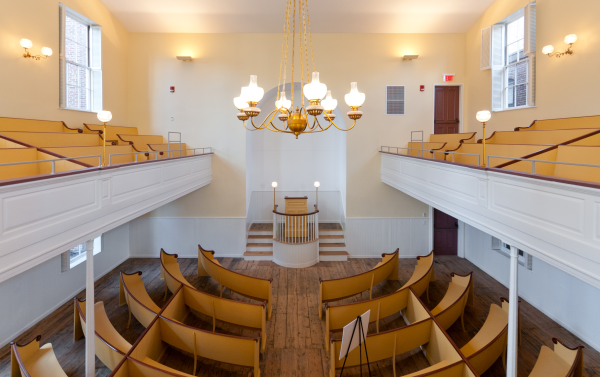
Boston is often celebrated for its role in the American Revolution. However, its Black history is just as rich with stories of courage, activism and community leadership. Through the Black Heritage Trail, students can explore the people and places that shaped the fight for freedom and educational equality in the city.
The Walking Classroom recently partnered with the Museum of African American History (MAAH) to tell some of these stories in podcast form. In this Q&A, Sage Morgan-Hubbard, Director of Learning and Engagement at MAAH, shares why this history matters, what students can learn, and how the Black Heritage Trail continues to inspire new generations.
Q: The podcast highlights historic figures like Lewis and Harriet Hayden, William Cooper Nell, Benjamin Roberts and Robert Morris. Why is it important for young people to learn about these individuals today?
A: These figures are some of the most outstanding humans we know of in Boston. They have such interesting and dynamic stories. We want to tell those stories and help students understand that Boston was important for many reasons and in many ways.
Even though Boston did not have the same level of direct involvement in the slave trade as the South, it played an important role in the fight for freedom. Both women and children were actively involved, as well as free people of color. These stories make our understanding of Black history in America more complete.
Q: Why is it important to elevate these stories?
A: It is especially important to elevate these stories because they are barely included in our history books, and there are more figures than just Harriet Tubman and Frederick Douglass. We know about the American Revolution, but not about the Black figures in the Revolution, and we have an exhibit now at MAAH highlighting those voices.
Q: The podcast explores themes of courage, activism and collective action. Why are these themes especially relevant for young people today?
A: Courage, activism and collective action are timeless. We are still being transformed as a society by young people, especially through acts of courage, activism and collective action. We have seen this time and time again, from the Civil Rights Movement to anti-bullying campaigns and beyond. These are lessons we need to learn and understand as a society.
“Courage, activism and collective action are timeless.”
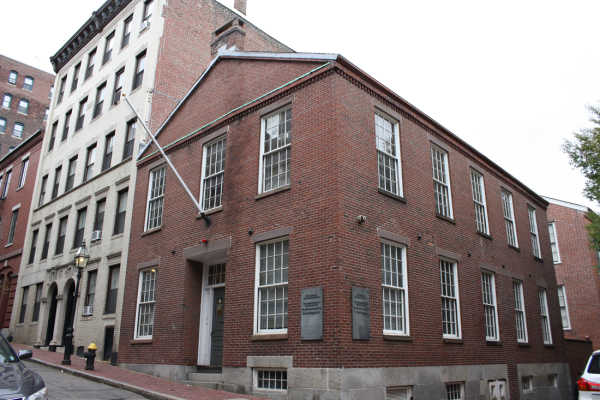
Q: MAAH is hosting a Juneteenth Block Party Celebration to highlight community, freedom and Black joy. How do the stories featured on the Black Heritage Trail connect to the spirit of Juneteenth today?
A: The museum hosts a Juneteenth celebration every year on June 19, and this year will be the largest yet, with celebrations across the city. It will also host programming at its Nantucket site on Saturday, June 20.
The stories on the Heritage Trail connect to the spirit of Juneteenth every day because they are stories of survival, self-emancipation, the Underground Railroad, Black businesses, ownership, sustainability and freedom fighting. They reflect a powerful yet small community of free Black people who fought for their rights, which led to the first all-Black public school and then desegregation of public schools by 1855—years before the rest of the country.
“These were amazing, accomplished abolitionists and activists who celebrated their lives to the fullest and continue to inspire us to do the same.”
Q: What do you hope students and educators take away from the podcast?
A: We hope they want to learn more, gain a deeper understanding of both familiar and lesser-known figures and see history come alive in a way that sparks imagination. We also hope they feel inspired by the stories of Beacon Hill’s Black community and think about how they can create change in their own communities today.
Q: For those who are inspired by the podcast, what would you encourage them to explore or experience next?
A: We encourage everyone who is inspired, curious or has questions to come to the Museum and experience our tours and the Black Heritage Trail for themselves.
Visitors can learn more about the Museum of African American History and purchase tickets. Ranger-guided Black Heritage Trail tours are also available.
Continue the journey with The Walking Classroom
Listen to The Walking Classroom podcasts to discover the people, places and powerful moments that make Boston's Black Heritage Trail such an important part of American history:
-By Nicole Blanton